


Warehouse Temperature & Humidity Monitoring Systems
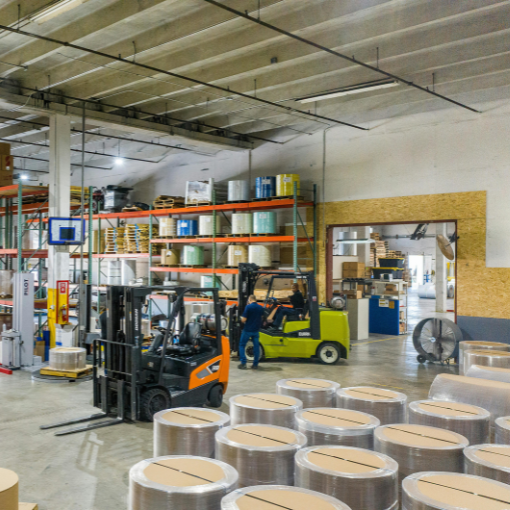
While wired temperature monitoring systems are a common tool to monitor temperature in cold storage warehouses, newer automated temperature monitoring systems are a much better way to measure, collect, and wirelessly transmit data. When searching for modern temperature monitoring solutions, facility managers rely on our wireless network to track warehouse temperature and humidity conditions, ensuring compliance and product safety through real time temperature monitoring without the need for expensive hardwiring.
How E-Control’s Automated Temperature and Humidity Monitoring Systems Work
E-Control Systems provides a real-time environmental management platform built specifically for large-scale storage facilities. Using advanced wireless sensors, the system tracks temperature, relative humidity, air quality, and energy consumption across your entire floor plan. If any climate setting drifts outside your safe operational limits, the system triggers instant, customizable alerts so your team can act before inventory is compromised.
With automated data logging and secure remote access, facility managers can monitor multiple locations, analyze historical trends, and pull audit-ready reports from any device. This continuous tracking helps warehouses lower energy costs, boost operational efficiency, and meet strict compliance standards automatically.
Warehouse Temperature and Humidity Monitoring
Managing a large-scale storage facility requires strict control over more than just the thermostat. Fluctuations in relative humidity can ruin sensitive inventory, degrade packaging, and cause costly product losses. Our wireless warehouse environmental monitoring system tracks both temperature and moisture levels continuously.
Whether you manage an ambient facility, a cold storage warehouse, or a climate-controlled distribution center, our sensors give you complete visibility. You get immediate notifications if moisture levels rise or fall outside your exact parameters. This allows your team to adjust HVAC and dehumidification settings before your products suffer moisture damage.
E-Control Systems Features for Warehouses
What makes E-Control Systems stand out? Our sensors and intelligates can monitor any aspect of your Warehouses business 24/7.





Industrial-Grade Wireless Monitoring for Warehouse Environments
Most warehouse monitoring systems fail because of signal interference or battery life. We’ve engineered our technology specifically for modern warehouses.
Long-Range Connectivity: Our sensors penetrate thick racking, stainless steel walls, and massive floor plans without the need for expensive wiring.
Fail-Safe Data Redundancy: Sensors record locally during power or Wi-Fi outages and automatically sync once restored. This ensures 100% complete, audit-ready compliance logs.
High-Precision Hardware: Built for high-value food and chemical storage where temperature accuracy is non-negotiable.
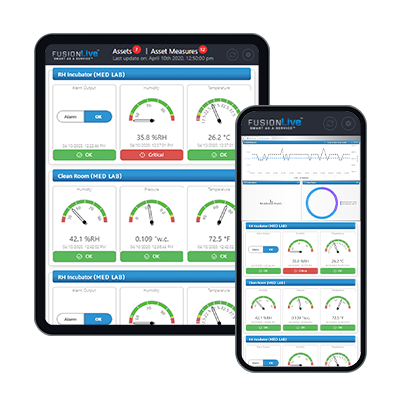
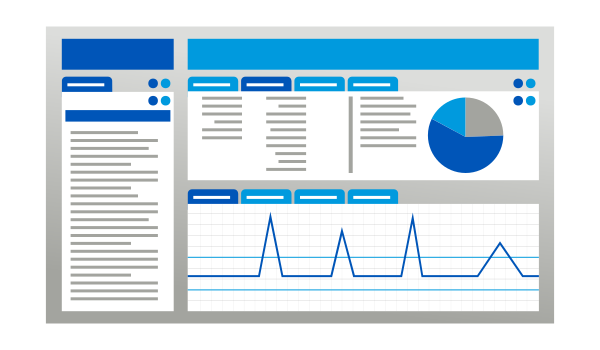
Multi-Site FusionLive™ Dashboard: Manage multiple warehouses from a single login. View real-time heat maps and humidity trends across your entire enterprise.
Validated Temperature Monitoring for Regulated Storage
Pharmaceutical and chemical warehouses face intense regulatory oversight. To pass inspections, your facility must comply with strict Good Distribution Practice (GDP) and GxP standards. Our platform simplifies compliance by generating automated, unalterable electronic records.
Our industrial temperature monitoring system delivers the exact proof auditors require:
NIST-Traceable Accuracy: Every sensor meets strict national standards to guarantee your data is legally sound.
Continuous Electronic Logging: The software automatically tracks environmental data every minute of the day, replacing unreliable manual paperwork.
Secure Cloud Storage: Your historical records are stored safely in a secure cloud network, ready to export during an unannounced health department or FDA inspection.
Our Warehouse Customers Include:




Optimized Environmental Control for Sensitive Inventory
1. Pharmaceutical & Life Sciences (GDP Compliance)
Medical supplies and vaccines require strict Good Distribution Practice (GDP). Our system automates the validation process, providing tamper-proof digital logs that satisfy FDA and DEA requirements.
2. Cold Storage & Perishable Goods
Prevent “hot spots” in your coolers and freezers. By monitoring humidity alongside temperature, you prevent frost buildup and mold, preserving the shelf life of produce and frozen inventory.
3. Contract Warehousing
Provide your clients with “Proof of Condition” reports. Our system allows you to grant limited dashboard access to your customers so they can verify their inventory is being stored at the correct parameters in real-time.
Wireless Warehouse Temperature Sensors VS. Wired Sensors?
When scaling a warehouse monitoring system, the “Hidden Cost” is often the installation.
Wired Systems: Require thousands of dollars in conduit, cabling, and labor. They are static and difficult to move when your warehouse layout changes.
ECS Wireless Sensors: Can be deployed in minutes. They are battery-operated, cost-effective, and offer the flexibility to move sensors as your inventory locations shift.
Warehouse Temperature Monitoring Systems FAQ's
What is a temperature and humidity monitoring system for warehouses?
A warehouse temperature monitoring system is a wireless technology solution designed to continuously measure, record, and transmit real-time climate data to a central dashboard. This system typically consists of sensors placed throughout the storage facility that collect data on environmental conditions and send immediate alerts to prevent spoilage. The data is analyzed in real time to ensure that the temperature and humidity remain within specified ranges. This is critical for maintaining the quality and integrity of temperature-sensitive and humidity-sensitive goods, such as food products, pharmaceuticals, electronics, and other perishable items.
What are warehouse temperature standards?
Warehouse temperature standards typically range between 50°F to 75°F for ambient goods, 34°F to 38°F for refrigerated items, and 0°F or lower for frozen products. Maintaining the ideal warehouse temperature depends heavily on the specific storage requirements of your inventory and regulatory compliance:
Perishable Food Items: Require refrigerated or frozen temperatures specific to the type of food being stored.
Pharmaceuticals: Many medications and vaccines require strict temperature control, often within a narrow range that can be as specific as 2°C to 8°C.
Electronics and Machinery: Preferably stored in conditions that avoid extremes of temperature and humidity to prevent condensation.
Chemicals: Certain chemicals need specific temperatures to maintain their stability and prevent reactions.
What is a warehouse temperature data logger?
A warehouse temperature data logger is a digital device equipped with sensors that automatically measures and records ambient temperature and humidity readings at set intervals. These devices range from basic models that simply record minimum and maximum temperatures to advanced versions offering real-time monitoring and wireless connectivity. The collected data can then be downloaded or wirelessly transmitted to a computer or cloud-based system for analysis. This allows warehouse managers to monitor temperature fluctuations, ensure that goods are stored under optimal conditions, and comply with strict FDA regulatory requirements.
How cold can a warehouse be legally?
While OSHA does not specify a strict legal minimum temperature for a warehouse, guidelines suggest maintaining at least 68°F for indoor sedentary work. The exact legal limit varies by country and depends on the type of work being done and the duration of exposure to cold conditions. Employers should consult local regulations to ensure compliance with legal standards for workplace temperatures, focusing on employee welfare alongside product storage needs.
Employers should consult local regulations and guidelines to ensure compliance with legal standards for workplace temperatures, focusing on employee welfare and product storage needs.
Can it be too hot for the warehouse?
Yes, excessive heat in a warehouse can cause severe heat stress among employees, damage temperature-sensitive products, and lead to equipment failure. High temperatures disrupt operations by spoiling goods and forcing machinery to overheat. Maintaining proper climate control is essential for worker safety and operational efficiency.
Benefits of Efficient Warehouse Temperature Monitoring
The primary benefits of a warehouse temperature monitoring system include preventing inventory spoilage, reducing energy costs, ensuring regulatory compliance, and automating real time temperature monitoring alerts. Product integrity is upheld by maintaining optimal temperatures for sensitive items, while energy efficiency is achieved through optimized HVAC control, lowering overall consumption. Modern systems provide a wealth of data that can be analyzed to improve warehouse layout, product placement, and safety. Real-time alerts and automation enable prompt action, preventing accidents, hazardous conditions, and massive financial losses.
How many warehouse temperature sensors do I need?
As a general rule, you need one warehouse temperature sensor for every 400 to 500 square feet of storage space, depending on the facility's layout and HVAC zones. You should also consider the specific types of goods stored, local regulatory requirements, and strategic placement near doors or high-traffic areas for accurate environmental tracking.
Does humidity need to be monitored in the warehouse?
Yes, a warehouse temperature and humidity monitoring system is critical to prevent corrosion, mold, and damage to sensitive electronics, pharmaceuticals, and food products. Effective humidity control also ensures the longevity of warehouse equipment and contributes to a healthier worker environment. It facilitates cost savings by preventing product spoilage and equipment degradation. Advanced humidity monitoring systems offer the advantage of real-time alerts, enabling immediate adjustments to maintain optimal conditions.
Will a wireless temperature monitoring system work in a warehouse?
Yes, wireless temperature monitoring solutions are highly effective in warehouses because they penetrate thick racking and easily scale to any facility size without expensive hardwiring. Our E-Control Systems provide real-time tracking, support remote access via smartphone, and require minimal installation efforts, making them the most cost-efficient way to reliably maintain optimal storage conditions.
What are the key benefits of using a warehouse temperature and humidity monitoring system?
Installing a warehouse monitoring system protects sensitive inventory from environmental damage, providing total peace of mind and operational efficiency. If your business stores pharmaceuticals, food products, electronics, or paper goods, minor fluctuations in the temperature can cause spoilage, mold, or corrosion. Instead of depending on manual checks, automated sensors measure, collect, and transmit data instantly to prevent expensive disruptions. Warehouse managers can respond quickly to any changes to ensure regulatory compliance.
How do warehouse temperature control systems differ from basic monitoring solutions?
Unlike passive monitoring that only sends alerts, automated warehouse temperature control systems actively regulate conditions by adjusting HVAC levels, ventilation, and dehumidifiers in real time. This proactively maintains consistent environmental conditions, using predictive algorithms to anticipate fluctuations and make adjustments before problems occur, rather than simply reacting after thresholds are breached.
What types of warehouse temperature monitoring devices are commonly used, and how are they installed?
The most common warehouse temperature monitoring devices are wireless sensor nodes, which are installed using simple adhesive pads or brackets in designated hot and cold zones. Because they are wireless, they can be easily repositioned if storage layouts change, and they transmit data via Wi-Fi or Bluetooth. For facilities requiring strict climate control, integrated HVAC sensors can also be embedded directly into ductwork or control panels by HVAC technicians.
How does warehouse temperature management contribute to regulatory compliance and operational efficiency?
Warehouse temperature management ensures strict regulatory compliance in the food and pharmaceutical industries by providing automated, audit-ready digital logs of all environmental data. From an operational standpoint, these systems support immediate cost savings and energy efficiency. Because the automated system guarantees products are stored within their required thermal ranges, violations and product degradation are avoided, making FDA audits and inspections smoothly accomplished.
Can warehouse climate control systems scale with my operation as it grows?
Yes, advanced warehouse temperature control systems offer complete customization and scalability, allowing you to seamlessly add new sensors and monitoring zones as your facility expands. Basic monitoring tools may provide useful data, but they lack the precision needed to manage complex, growing storage environments. Our systems at E-Control Systems work for warehouses of all sizes and configurations, allowing you to manage data from multiple facilities from anywhere with a remote smartphone dashboard.
What maintenance is required for warehouse temperature and humidity monitoring systems?
Warehouse temperature monitoring devices require routine sensor calibration and regular software updates to ensure continuous, pinpoint accuracy. Environmental conditions can cause minor reading drifts, especially in high-traffic or industrial areas. Because small deviations can lead to spoilage or compliance issues, performing regular and remote calibration becomes incredibly important for maintaining precise records and operational security.
How do warehouse temperature monitoring devices handle data during power or connectivity disruptions?
During power or Wi-Fi disruptions, our warehouse temperature monitoring devices store readings locally and automatically sync the data back to the cloud once connectivity is restored. Reliable monitoring devices are positioned in overlapping zones and utilize cellular network backups. Alerts and logs continue to flow, even during widespread power failures, allowing managers continuous oversight without ever losing historical audit data.