



Request a Quote Today

Thank You For Your Interest in E-Control Systems Please fill out the required fields here. We will review your request and contact you back shortly. If you have any questions about this quote, or our service in general, please feel free to contact us here or call us at 818.783.5229.

    (By providing my contact information below, I consent that E-Control Systems can contact me with information regarding my quote.)

    Image Alt
    E-Control Systems
     . Blog  . FDA Audit Preparation: 5 Strategic Steps to Ensure Compliance
    FDA audit preparation

    FDA Audit Preparation: 5 Strategic Steps to Ensure Compliance

    Understanding FDA Audit Guidelines

    For any facility that handles pharmaceuticals, medical devices, foods, or products that may be temperature sensitive, understanding FDA audit guidelines is important. FDA audit guidelines focus on verifying product safety, sanitation, documentation accuracy, and adherence to industry‑specific regulations. To ensure FDA audit preparation, be ready to provide complete records, demonstrate proper temperature control, and show evidence that quality control practices are consistently used. Maintaining Internal procedures and documenting any corrective actions means your business can pass inspection and avoid compliance issues.

    How to Prep for an FDA Quality Audit

    If you want to know how to prep for an FDA quality audit, ensure you have up-to-date documentation, processes, and accurate environmental controls. Review your previous inspection results, update your standard operating procedures, verify your temperature-sensitive storage conditions, and confirm your calibrations to show that equipment is properly maintained. Corrective actions that have been made should also be thoroughly documented. If you use an automated temperature tracking system, this data will be accessible and ready for FDA inspectors before they arrive.

    The Essential FDA Audit Checklist

    A strong FDA audit checklist and proper preparation ensures your facility is inspection‑ready year‑round by keeping documentation, processes, and quality controls compliant with FDA regulations.

    • SOPs & Training Logs: Ensure all standard operating procedures are current, signed, version‑controlled, and consistently followed.
    • CAPA Files: Close out previous Corrective and Preventive Actions with documented analysis and evidence that it was effective.
    • Data Integrity: Verify audit trails, electronic signatures, and system access controls (21 CFR Part 11).
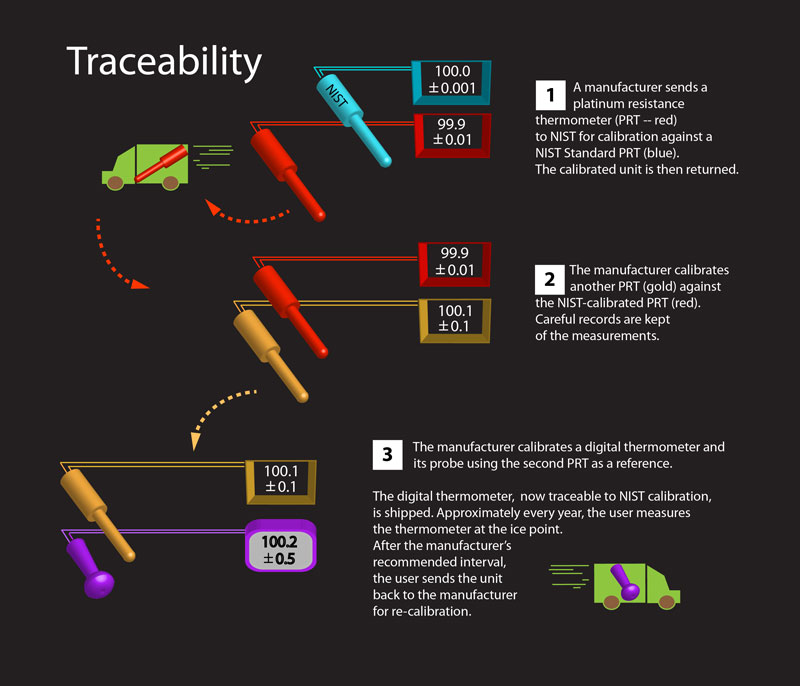
    • Calibration & Equipment Records: Ensure all equipment is calibrated, validated, and documented with traceable records.
    • Environmental & Temperature Monitoring Logs: Confirm continuous monitoring, alert history, and complete digital logs for temperature‑sensitive areas.
    • Cleaning & Sanitation Records: Document cleaning schedules, chemical usage logs, and verify sanitation.
    • Supplier & Receiving Documentation: Verify supplier qualifications, COAs, receiving inspections, and traceability.
    • Batch Records & Production Logs: Ensure complete, error‑free batch records with proper sign‑offs and traceability.
    • Internal Audit Reports: Keep records of internal audits, findings, and corrective actions.
    • Complaint & Recall Procedures: Document complaint investigations, recall readiness, and response procedures.
    • Training & Competency Verification: Confirm staff training, retraining, and competency assessments are up to date.
    • Quality Management System Documentation: Ensure your QMS is current, accessible, and matches FDA expectations.

    Build a Permanent Culture of Readiness

    To create a permanent culture of FDA audit readiness, means making continuous compliance and reliable monitoring a consistent expectation and embedding audits into your everyday operation so they’re routine, not disruptive. Businesses can strengthen their FDA audit readiness by using automated temperature tracking systems that keep complete and accurate logs, and train their staff to recognize and correct issues before they escalate, so they’re always prepared for an unannounced FDA inspection.
    FAQs

    How much advance notice does the FDA give before an audit?

    The FDA provides little to no advance warning before inspections when public health or product safety is at risk. It’s unpredictable when investigators will arrive on-site, so businesses need to continuously monitor compliance and ensure their records, logs, and temperature data are time-stamped, automated, and always ready to be inspected. Using an automated temperature monitoring system will help ensure you’re prepared for an audit, no matter when the FDA arrives at your facility.
    What triggers an FDA quality audit?

    If a facility shows signs of non-compliance, it may trigger an FDA audit due to potential risks involving product safety or sanitation. Triggers might include inconsistencies found during a previous inspection, consumer complaints, incomplete documentation, labeling issues, deviations in product quality, or issues with environmental controls. Sometimes audits occur due to industry risks, routine surveillance, or how a business deals with temperature-related incidents for products. When businesses maintain control using automated systems, they’re more likely to be audit-ready without FDA violations.

    What are the biggest challenges of implementing predictive maintenance technology?

    Implementing predictive maintenance technology requires technical expertise and the ability to manage large volumes of data. Even if a business invests in data-driven maintenance, they sometimes underestimate how difficult it can be to integrate sensors, configure alerts, and educate maintenance teams about it. Effective predictive maintenance technology requires building a data foundation to ensure accurate forecasting. Without collecting consistent data and calibrating predictive systems, predictions may be unreliable. Success with this technology depends on accurately setting up monitoring platforms, training employees, and the quality of the data.


    For more information about what E-Control Systems can do for your food service business, take a look at our Food Service solutions.