



Request a Quote Today

Thank You For Your Interest in E-Control Systems Please fill out the required fields here. We will review your request and contact you back shortly. If you have any questions about this quote, or our service in general, please feel free to contact us here or call us at 818.783.5229.

    (By providing my contact information below, I consent that E-Control Systems can contact me with information regarding my quote.)


    Image Alt
    E-Control Systems
     . Blog  . Why You Need Data Center Sensors for Remote Monitoring
    Data Center Monitoring

    Why You Need Data Center Sensors for Remote Monitoring

    The Role of Data Center Monitoring Sensors in Preventing Downtime

    Data center monitoring sensors keep IT systems stable by detecting power and environmental fluctuations. Using 24/7 monitoring sensors that are strategically placed throughout a data center measures moisture, heat, and power usage in real time, recording every change so they can be analyzed. They push alerts to operators through email, text, or a mobile app when changes occur,  ensuring a quick response before issues accelerate and cause downtime. 

    Preventing Thermal Runaway and Equipment Throttling

    Thermal runaway and throttling begin with small temperature spikes that go unnoticed, but E‑Control Systems sensors prevent these by providing real-time visibility into environmental changes. By continuously tracking conditions inside racks and aisles, the sensors identify hot spots, restricted airflow, and cooling failures so adjustments can be made before servers are forced to throttle or risk overheating. 

    Real-Time Alerts: The Core of Remote Monitoring for Data Centers

    Real‑time alerts are the foundation of effective remote monitoring for data centers because they protect mission-critical hardware and notify operators immediately when readings shift out of range. When a problem is detected and reported to the monitoring platform, whether it’s a cooling failure, a developing hotspot, or a leak, operators can intervene and ensure the issue is addressed before an outage occurs. 

    Optimizing PUE (Power Usage Effectiveness) and Reducing Energy Costs

    Data center operators can improve PUE significantly when monitoring sensors report where cooling and power are being overused. By tracking temperature, humidity, and airflow in real time, a data center sensor pinpoints overcooled zones and uneven airflow that drives up energy use. Using this strategy minimizes wasted energy and maintains an optimal PUE while reducing operating costs. 

    Beyond Temperature: Monitoring Humidity, Water Leaks, and Airflow

    Humidity, water leaks, and airflow are as important as temperature if your goal is to protect data center equipment. Sensors track moisture levels to prevent corrosion and electrostatic discharge, while leak‑detection sensors warn about water intrusion before it reaches racks or cabling. Airflow sensors identify blockages and cooling inconsistencies that could cause hot spots. Combined, these sensors provide a proactive approach for safeguarding the data center.

    Data Center Monitoring FAQ's

    What are the most important data center sensors to install?

    One of the most important data center sensors to install is a temperature‑and‑humidity combination sensor because it monitors two critical environmental conditions simultaneously. Since both moisture and heat can influence how well servers perform, monitoring them both at the same time means imbalances can be detected and corrected quickly before they escalate into outages or damage hardware.

    How do data center monitoring sensors improve energy efficiency?

    Monitoring sensors save energy by continuously tracking temperature, humidity, and airflow, identifying hot spots and overcooled areas. Using accurate data, equipment can be fine-tuned to match actual demand instead of running at full capacity, which translates into energy savings. With precise environmental control, energy bills are lower, and facility performance becomes more efficient.

    Can I set up remote monitoring for data centers without a full BMS?

    You don’t need a full Building Management System to monitor a data center remotely. E‑Control Systems sensors support remote monitoring in a data center without a full BMS. Our networked temperature and humidity sensors, power quality monitors, leak detectors, and airflow sensors are able to send data directly to cloud-based platforms. They provide reliable remote visibility and real-time alerts of a BMS without having to invest in one. 

    What is the ideal placement for a data center sensor in a server rack?

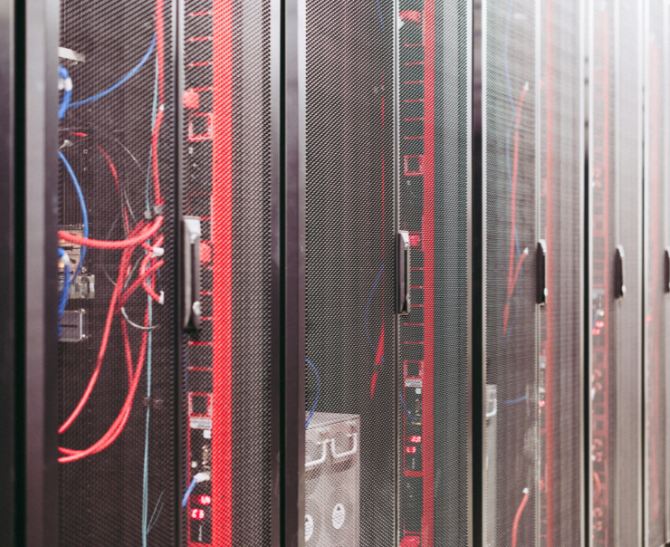
    The best place to put a data center sensor in a server rack is near the top front of the rack, close to the intake vents where cool air enters. This location allows the sensor to detect the temperature of the air before it passes through the hardware, instead of heat being expelled. When the sensor is properly positioned, it delivers reliable monitoring and prevents heat-related failures. 


    For more information about what E-Control Systems can do for your healthcare facility, take a look at our Healthcare solutions.