


Share
Blog
Commercial Refrigeration E-Control Systems Transportation Warehouses Wireless Temperature Monitoring

Thank You For Your Interest in E-Control Systems Please fill out the required fields here. We will review your request and contact you back shortly. If you have any questions about this quote, or our service in general, please feel free to contact us here or call us at 818.783.5229.
(By providing my contact information below, I consent that E-Control Systems can contact me with information regarding my quote.)

Warehouse temperature mapping measures how temperature patterns behave throughout a storage facility over time. When sensors are positioned in key locations, staff can track how heat moves throughout the facility, identify problem areas, and confirm that the environment stays within required temperature ranges. This process ensures products are protected and that the warehouse meets regulatory expectations for temperature‑sensitive storage.
A warehouse temperature mapping study is essential because it verifies your facility can maintain stable, compliant temperatures for sensitive products and provide consistent operating circumstances. Regulations for pharmaceuticals, food, and other temperature‑sensitive goods require documented proof that each area of the warehouse, including corners, aisles, shelves, and high-traffic zones, stay within its approved temperature range. Following temperature mapping procedures in a warehouse helps businesses identify fluctuations, hot spots, cold zones, and airflow issues so they can correct issues and ensure the warehouse and products meet industry standards.
Regulatory compliance requires warehouses to prove their ability to stay within approved temperature ranges all the time. Owners of warehouses need to be able to provide data reports as proof to show auditors that they are performing within the limits set by official government agencies.
Temperature mapping plays a role in risk mitigation because it allows warehouse workers to detect vulnerabilities that aren’t visible and could compromise sensitive goods. This proactive approach allows them to take corrective action, reduces the risk of excursions, and ensures your facility is always ready for audits.
Temperature mapping in a warehouse uses procedures that evaluate how temperatures perform and fluctuate in the storage environment. Sensors are strategically placed so they can capture real-time data. This study will verify that your warehouse meets product safety requirements and provides reliable temperature monitoring to comply with official regulations.
The first step in a temperature mapping procedure is creating a protocol and evaluating how potential risks inside the warehouse should be tested. This includes identifying sensitive zones, understanding airflow patterns, and defining the conditions under which the study will be performed. Then the test can capture accurate temperature variations that meet regulatory expectations.
During this step, sensors are positioned in high‑traffic areas, in corners, near doors, and at multiple heights within racking systems in the warehouse. When effectively placed, the sensors ensure the mapping study reflects real‑world temperature behavior.
When tests are completed under variable conditions, temperature changes can be evaluated to see if the warehouse has operational fluctuations, including differences in airflow, seasonal changes, or if equipment has overheated. The testing phase can confirm that the temperature is within an acceptable range even during real-world conditions.
Any collected temperature data is analyzed and reviewed to identify trends, inconsistencies, and patterns that deviate from acceptable, stable ranges during the study. The study’s final report documents performance, highlighting problems for audits and quality control.
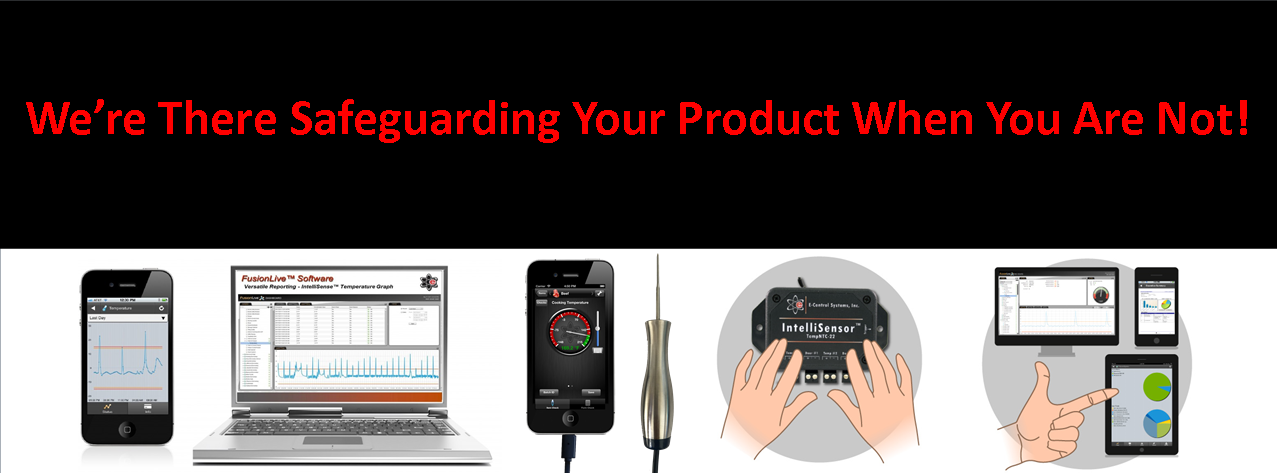
A warehouse temperature mapping study offers a snapshot of how your facility performs, but transitioning to a full E-Control Systems warehouse temperature monitoring system ensures you’ll always have continuous oversight. Real‑time monitoring immediately detects fluctuations, using automated alerts, efficient data tracking, and supporting compliance, while protecting sensitive products around the clock.
Warehouse temperature mapping reveals issues that aren’t always obvious, but it’s important to maintain product stability. Understanding the most common challenges helps facilities create a reliable, compliant, and controlled storage environment. Here are some common challenges facilities face:
An accurate warehouse temperature mapping program gives you the reliable data you need to preserve product integrity and comply with regulations. Excursions can be prevented, and sensitive products can be safeguarded from end to end, strengthening your supply chain and keeping it safe.
The exact number of sensors needed for a warehouse temperature mapping study varies based on the building’s dimensions and how its products are stored. Larger warehouses or facilities with tall racking systems often need more sensors to capture temperature differences at multiple heights and zones. A well‑designed mapping plan ensures sensors are strategically spaced to reveal temperature fluctuations and maintain consistent, compliant temperatures.
A typical temperature mapping test runs long enough to record multiple operational cycles and catch behavior patterns. The exact time these take varies by the size of each facility, environmental conditions, and regulatory rules. It may take several days to capture fluctuations, airflow routines, and conditions during various activity levels,
Humidity mapping is necessary when stored products react to moisture or when regulations specify what the humidity levels should be. Pharmaceuticals and biologics are susceptible to deviations in quality when humidity levels are inconsistent. Combining humidity mapping with temperature mapping preserves a stable space so the warehouse can guarantee consistent, long-term product quality and industry expectations.
Please fill out the form here so we can know a little more about you. You will be directed to our brochure downloads page promptly afterward.